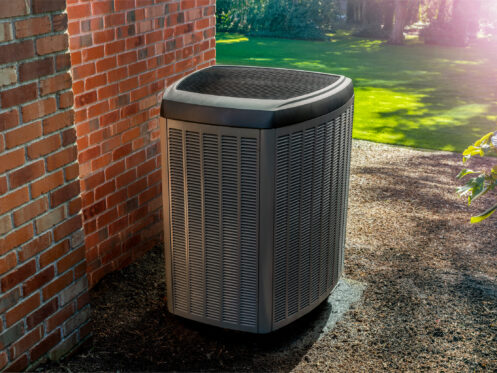
If you are shopping for a new HVAC system, there is a good chance you will come across heat pumps is that they are not new. The scientific principles behind them date back to 1852, and the first working models appeared only a few years later. You already have smaller heat pumps in your home right now—your refrigerator and your air conditioner.
Both devices move heat rather than create it. A refrigerator removes heat from its interior and releases it into your kitchen. An air conditioner removes heat from your home and releases it outside. The system we call a “heat pump” in HVAC terms works the same way but can run in two directions. In the summer, it removes heat from your home to keep you cool. In the winter, it reverses the process, extracting heat from outdoor air and bringing it inside to keep you warm.
Heat Pumps and the Refrigeration Cycle
Every heat pump relies on the refrigeration cycle to move heat. The process uses a refrigerant that continually absorbs and releases heat as it changes between liquid and vapor states. This happens because of two key scientific principles: heat always flows from warmer to cooler substances, and changes in pressure affect temperature and boiling point.
In cooling mode, the system functions like a standard air conditioner. In heating mode, a component called a reversing valve changes the direction of the refrigerant flow. The refrigerant first passes through an expansion valve, which lowers its pressure and temperature. It then enters the outdoor coil, where a fan blows cold outside air across it. Because the refrigerant is even colder than the air, it absorbs heat energy and evaporates into a vapor.
Common refrigerants, such as R-410A, have boiling points far below freezing—around -55°F at low pressure—allowing them to extract heat even from cold air. The vaporized refrigerant then travels to a compressor, which increases its pressure and raises its temperature dramatically. The now-hot refrigerant moves to the indoor coil, where another fan blows your home’s air across it. The refrigerant releases its heat into that air, warming your living space before condensing back into a liquid. The cycle repeats continuously, providing steady, efficient comfort.
The Advantages of a Heat Pump
The greatest advantage of a heat pump is efficiency. Unlike gas or electric furnaces, which generate heat through combustion or resistance, a heat pump transfers heat that already exists in the environment. Gas furnaces typically achieve 81 to 98 percent efficiency, and electric furnaces operate at 100 percent efficiency. By contrast, a heat pump can reach efficiencies of 300 to 400 percent. That means for every unit of electricity it uses, it can deliver three to four units of heat.
Because of Sacramento’s mild winters, heat pumps operate at their most efficient levels here. They also provide cooling during the summer, eliminating the need for separate heating and air conditioning systems. Most central heat pumps have the same footprint as traditional AC units, so converting is simple. If your home lacks ductwork, a ductless mini-split heat pump is another option. Mini-splits pair one outdoor unit with several indoor air handlers, providing zoned comfort and even higher efficiency since they avoid duct energy losses.
Local Heat Pump Experts
Huft Home Services is Sacramento’s trusted source for high-quality heat pumps and professional installation. Since 2004, we have helped homeowners upgrade to energy-efficient systems that deliver reliable comfort year-round. We offer a range of products from top brands such as Lennox and provide financing options on approved credit. Our experienced team will assess your home, explain your options, and help you select the ideal system for your needs. For dependable comfort and long-term savings, upgrade to a heat pump with Huft Home Services today.