
With rising utility bills and summer temperatures that continue to break records, finding the right air conditioner for your California home is more important than ever. AC choice in California is not a one-size-fits-all solution, so Huft Home Services has made it our mission to provide homes across California with the best ductless mini split or central AC systems. Older homes without existing ductwork may benefit from a mini split, while more modern homes with ductwork may need central AC. Find out about ductless mini splits vs. central AC systems for your California home.
What Is a Ductless Mini Split System?
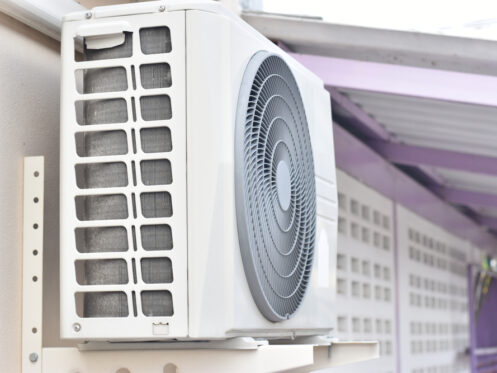
A ductless mini split system consists of two main components — one or more indoor air handlers mounted on walls or ceilings inside the home, and a single outdoor compressor unit that connects to those handlers through a wall. No ductwork is required, and each indoor handler can be set independently, enabling zoned cooling.
Most modern mini split heat pumps provide both cooling and heating from the same unit, making them a versatile year-round solution.
Best use cases
Ductless mini splits are a good option for older homes with existing ductwork. A mini split might be the best cooling solution for the following areas:
- Home additions
- Attics and basements
- Rooms with inconsistent temperatures
- Rental units
What Is Central Air Conditioning?
Central air conditioning is a traditional whole-home cooling system. It comes with an outdoor compressor unit connected to an indoor air handler, which circulates cooled air through a network of ducts and vents throughout the home. A single thermostat usually controls the whole house.
Central AC systems are designed to deliver consistently cooled air throughout an entire home where existing ductwork is already in place.
Best use cases
The scenarios that are best for central AC systems include:
- Homes with ductwork
- Larger homes
- New constructions
Mini Split vs Central AC: Key Differences
The biggest difference between mini split and central AC systems is the ductwork. Central AC depends on a network of ducts and vents to function properly and cool the entire home. Ductless mini-splits don’t require ductwork and cool only specific rooms, with each indoor air handler delivering cooled air directly into the space it serves. For California homeowners whose homes were built without ducts, that distinction alone often decides the conversation.
Another difference is zone controlling. A standard central AC system runs on a single thermostat, cooling the entire home to one set temperature. Mini splits give you room-by-room control. You can cool the bedrooms at night while leaving common areas warmer, or keep a home office comfortable without running the whole system. This distinction is also important for energy efficiency.
Energy Efficiency & Operating Costs in California
Energy efficiency is an important factor in your California HVAC choice. It’s also where ductless mini splits have a significant advantage.
Central ACs use a network of ducts and vents, and these ducts can leak air. In fact, around 20% of conditioned air is lost through leaky ducts, holes, and poor connections. This is a huge discrepancy that contributes to energy and money loss. Mini splits don’t have ducts, so you don’t have to worry about air loss.
SEER (Seasonal Energy Efficiency Ratings) is also important. Modern, high-efficiency SEER ACs with ratings of 20 or higher cost more upfront but result in lower energy bills.
Installation Considerations
When in the market for a new AC, the installation time also comes into play.
Mini split installation
Mini split installation is usually straightforward. Installation typically requires drilling through an exterior wall for the conduit connecting the indoor and outdoor units. Because no ductwork is required, the disruption to the home is minimal.
Central AC installation
If your California home already has existing ductwork, central AC installation is also relatively straightforward. The challenge arises in homes without ducts or needing a complete duct system replacement.
Installing a full duct system in an existing California home is a major construction project that involves opening walls and ceilings, running ducts through the attic or crawl spaces, and adding supply and return vents throughout the home.
Comfort and Performance Differences
Both AC systems cool effectively when properly sized and installed, but they do so in different ways. Ductless mini splits excel at zoned comfort because each air handler cools its designated area independently. For households with varying comfort preferences or rooms that consistently run hotter or cooler than others, this level of control is a significant upgrade.
Modern central ACs are great for whole-home cooling when the system is properly sized and the ducts are well-sealed and installed. Every room needs to reach the thermostat setpoint at roughly the same time.
Humidity control is an important factor in California’s hot summers, and both systems can reduce indoor humidity during cooling cycles. Mini splits are slightly more effective at dehumidification in mild conditions because they can run longer at lower capacity.
Pros and Cons of Each System
Ductless mini splits and central AC systems each have their own pros and cons for California homeowners.
Mini split pros
The pros of mini splits include:
- No ductwork needed.
- Room-by-room zoning for personalized comfort and energy savings.
- High efficiency without duct loss.
- Provides heating and cooling as a heat pump.
- Quieter operation than central AC.
Mini split cons
Some cons of mini splits include:
- Higher cost for whole-home comfort as multiple units need to be installed.
- Wall-mounted units are visible in every room.
- May require frequent maintenance based on the reliability of each indoor handler.
Central AC pros
The pros of central AC are:
- Whole home cooling with one thermostat.
- Lower upfront cost when existing ductwork is present.
- No visible units in rooms.
Central AC cons
The cons of central AC include:
- Significant duct loss reduces efficiency.
- Poor zoning without expensive additions like dampers.
- Retrofitting ducts in older homes is costly and disruptive.
- Duct maintenance and sealing will be needed down the road.
Which System Is Best for California Homes?
The best system for California homes depends on your home style, but there are some clear guidelines.
Choose a ductless mini split if you have an older home without existing ductwork, you’re looking to cool a room addition, and energy efficiency is a top priority.
Choose a central AC if your home has existing ducts in good condition, you’re building a new home, or you want to cool a larger home in California.
Cost Comparison: Mini Split vs. Central AC
Understanding realistic cost ranges also helps set expectations before you request an estimate for a new AC. A single-zoned mini split is anywhere from $2,500 to $5,000, depending on its SEER rating. Multi-zone systems that cool three to five zones cost around $8,000 to $20,000.
A central AC installation with existing ductwork can cost $ 5,000 to $10,000, depending on the required unit size (based on square footage and other factors) and SEER rating. A central AC system that requires existing ductwork costs anywhere from $12,000 to $20,000, depending on the complexity of the job.
Why More California Homeowners Are Choosing Mini Splits
Many homes in California are part of an older, historical housing stock (pre-1970s) that has aging or no ductwork, making ductless mini-splits more beneficial. California’s push for green energy is also a factor. Ductless mini split heat pumps move heat rather than generate it, making them more energy-efficient.
With more homeowners switching to cleaner energy, mini splits have become increasingly popular in recent years.
Contact Huft Home Services for Central or Ductless Mini Split AC Installation
If you are unsure which type of AC system is best for your home situation, Huft Home Services is happy to offer our HVAC expertise. We’ll assess your home’s cooling needs and determine whether a central AC or a ductless mini split is the right call. Contact us today to schedule a consultation for your California home.
Mini Split vs Central AC FAQs
Are mini splits cheaper to run than central AC?
Yes, in most California homes, mini splits are cheaper to run than central ACs. The reduced cost is due to their high efficiency and the lack of concerns about ductwork energy loss.
Can a mini split cool an entire house?
Only a multi-zone mini split (with multiple indoor units) can effectively cool an entire house. Multi-zone units are more costly upfront, but they’re the best way to cool an entire home with existing ductwork.
Is central air better for resale value?
Central ACs are still the most traditional way to cool a house, so some buyers expect them. Still, California is becoming more energy-conscious, so ductless mini splits are often seen as a premium upgrade.
How long does installation take?
A single-zone mini split system for one room is often installed in a single day. A multi-zone system or multiple units for several rooms may take a few days to install.