
Backwater Valves: How to Protect Your Home From Sewer Backups in Storm Season
When Sacramento storms and heavy rainfall impact the public sewer system, they can pose a serious risk to your home’s health and safety. A backwater valve is a one-way mechanical valve that’s installed on your home’s main lateral sewer pipe and prevents public sewage from backing up into your home when the system becomes overwhelmed. We’ll explore why sewer backups can strike during heavy storms and whether a backwater valve is the right fit for protecting your Sacramento home from sewer emergencies.
Why Sewer Backups Spike During Sacramento Storms
When a heavy downpour strikes Sacramento, it can lead to severe municipal sewer backups and other plumbing emergencies that impact residential homes. Many of Sacramento’s older neighborhoods use a combined sewer system, meaning that both stormwater and sanitary sewage travel through the same pipes. Storms can overwhelm this system, leading to a sewer backing up when it rains.
However, it’s not just Sacramento’s older neighborhoods that are impacted. Saturated soil and groundwater can put pressure on underground pipes, and stormwater can infiltrate through plumbing even in more recently developed areas. Underground tree root intrusion can worsen the problem, leading to blockages and further backups.
How a Backwater Valve Works
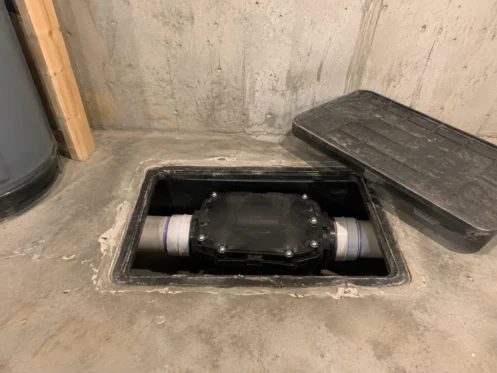
A backwater valve uses a simple one-way flow system to allow sewage to exit your home while preventing any backups from entering your home. Under normal conditions, the internal flapper is open to allow water and waste to flow freely out of your home. When backflow from a storm or a blockage occurs, it enters the valve chamber and lifts a small flotation device that detects the backflow. This triggers the valve to shut, creating reliable sewer backup prevention. When the water pressure returns to normal, the valve opens again.
Do You Need One? Who’s Most at Risk
Whether your Sacramento home needs a backwater valve depends on your home’s construction and location. A backwater valve is required by California’s Uniform Plumbing Code if your home’s lowest floor with plumbing fixtures is located below the next upstream manhole cover. If you’re unsure whether your home meets these criteria, a licensed plumber can inspect your home and the street outside to find the answer.
Not all Sacramento homes need backwater valve installation. If your home doesn’t have a basement, and if all of your main level plumbing sits above the upstream manhole cover, a backwater valve may not be required. Homes that are most at risk of municipal sewage backups are those with basements that include plumbing, or any other plumbing fixtures that sit below street level. These can include things like laundry sinks and floor drains. Homes in low-lying areas, homes that have experienced previous backups, or homes in older neighborhoods with combined sewer systems are also at a higher risk of sewer backups.
Backwater Valve vs Overflow Protection Device (“Popper”)
A backwater valve and an overflow protection device, commonly called a popper, are both sewer backup preventer devices — however, they operate in very different ways. While a backwater valve prevents sewage from flowing back through your pipes and into your home, a popper relieves excess pressure created by backed up sewage by diverting it into your yard.
Backwater valves have the advantage of keeping sewage safely contained, but they require you to completely halt water usage during the backup. A popper allows for some limited water use, but it runs the risk of sewage overflow into your yard or driveway, which requires specific biohazard cleanup procedures. Other systems like sump pumps also offer additional protection from water damage during floods, and may be used together with sewage protection devices. Consulting a licensed plumber is the best way to determine whether your home could benefit from one or several of these systems.
Signs Your Sewer Line Is at Risk
Keep an eye out for these common signs that your sewer line is at risk of failing:
- Gurgling sounds or bubbles coming from your drains or toilets
- Multiple slow drains throughout your home
- A persistent sewage odor, especially around drains
- Soggy patches or lush green grass around your sewage line
- Any of these signs grow worse with heavy use or after a rain
Practising regular preventative drain cleaning reduces the risk of sewer line issues for Sacramento. If your sewer line does experience a clog or other issue, professional hydrojetting services can clear the obstruction quickly and effectively.
Installation and Maintenance
When you schedule backwater valve installation with the team at Huft Home Services, we’ll help take care of local permitting so installation can proceed smoothly. Once the permit has cleared, we’ll start with a sewer camera inspection to confirm the suitability of your plumbing system, then install the valve in the main sewer line lateral, typically in a masonry or plastic valve pit. This allows for easy maintenance access.
It’s recommended to include an inspection and overflow protection device sewer cleanout with your annual plumbing maintenance visit to make sure that your system is always prepared for an emergency. It’s also important not to run any water while the valve is closed, since wastewater is no longer able to exit your home during backup protocols.
Who’s Responsible? Your Lateral vs the Sewer District
In Sacramento, the homeowner is always responsible for a backwater valve. This is because the backwater valve is attached to your sewer line lateral and protects your individual home. The sewer district is only responsible for lower laterals that cover the public right of way and the street. Since your sewer line and backwater valve are your responsibility, it’s important to stay up to date on preventative maintenance and other sewer line services.
Schedule a Sewer Inspection Before the Next Storm
Stay ahead of sewer emergencies with comprehensive sewer line solutions from Huft Home Services. We provide annual sewer inspections as well as drain cleaning, hydro jetting, backwater valve installation, and more to protect your Sacramento home from sewer issues. Contact us today to learn more about caring for your home sewer system and to schedule your next preventative sewer inspection.
Frequently Asked Questions
How much does a backwater valve cost to install?
The cost of installing a backwater valve in Sacramento depends on your home’s location and plumbing setup. We’ll always provide you with a clear and comprehensive quote before we begin service so you’ll know what to expect from backwater valve installation.
Does homeowners insurance cover sewer backups?
Most homeowner insurance policies in Sacramento do not cover sewer backups. You may be able to purchase an add on insurance rider, although separate riders are typically required for indoor sewage cleanup and sewer line repairs.
Can I install a backwater valve myself?
No, it is not safe to install a backwater valve yourself, and is often illegal in many cases. Always call a licensed plumber for backwater valve installation.