
Updated: November 18, 2026
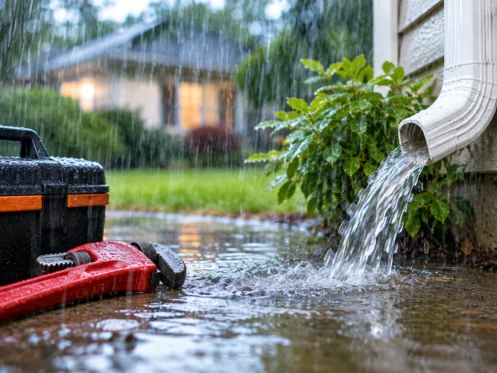
When the rain starts pouring in Sacramento, most homeowners are thinking about leaky roofs, flooded yards, or whether they remembered to close the windows. Their plumbing? Probably not at the top of the list.
But if you’ve ever heard your toilet gurgle during a storm or noticed that your shower suddenly isn’t draining properly, you might have wondered: Can too much rain actually cause plumbing problems?
Yes, heavy rain can contribute to plumbing problems, especially when sewer lines are already clogged, cracked, or deteriorating. Saturated soil, excess groundwater, and overwhelmed drainage systems can turn minor plumbing issues into messy, expensive emergencies.
The good news is that most problems come with warning signs. Knowing what to look for can help you catch trouble before you’re dealing with sewage in your bathtub or standing water in your home.
How Does Heavy Rain Affect Your Home’s Plumbing?
Sacramento and Elk Grove homeowners are no strangers to long stretches of dry weather followed by days of steady rain. While your home’s plumbing is designed to handle everyday water use, heavy rainfall can create problems that don’t show up during the drier months.
Here’s why.
Your home’s sewer line carries wastewater from toilets, sinks, showers, and appliances to the municipal sewer system or a private septic system. Under normal conditions, that wastewater flows away from your home without much thought on your part.
Heavy rain can complicate things in a few ways:
Groundwater can enter damaged sewer pipes. Cracks, loose joints, and deteriorating connections may allow rain-soaked groundwater to seep into underground sewer lines, increasing the amount of water they must carry.
Sewer systems can become overwhelmed. During significant storms, excess water entering municipal sewer infrastructure can contribute to backups, particularly where capacity or drainage problems already exist.
Saturated soil can shift. Changes in soil moisture and ground movement may put additional stress on aging or vulnerable underground pipes.
Existing blockages can become more noticeable. Tree roots, grease, and debris can restrict wastewater flow. Additional groundwater entering a damaged line may make an existing problem worse.
That doesn’t mean every rainstorm will cause plumbing trouble. A properly functioning plumbing system should generally handle normal rainfall without issues.
However, if your drains consistently act up whenever it rains, it’s worth investigating.
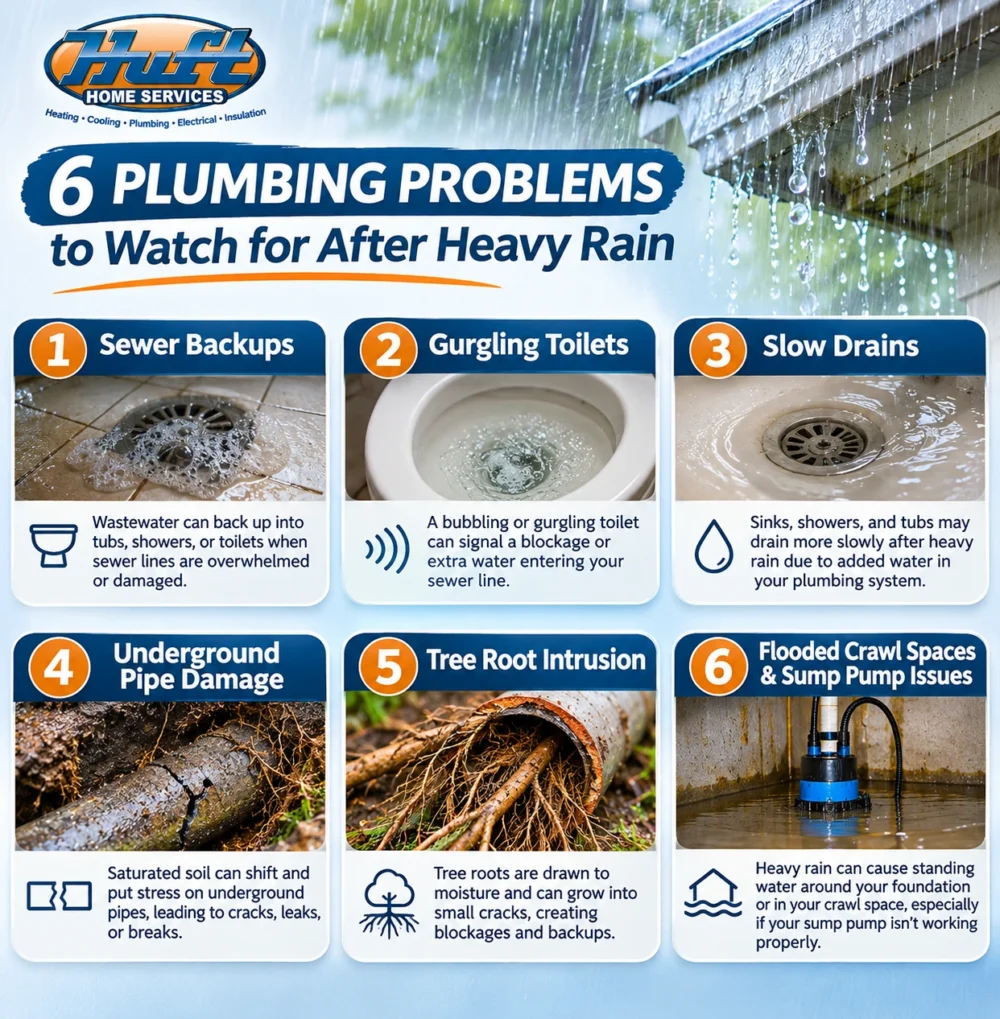
6 Plumbing Problems to Watch for After Heavy Rain
1. Sewage Backing Up Into Your Home
Few plumbing problems get a homeowner’s attention faster than wastewater coming up through a shower drain or overflowing from a toilet.
A sewer backup happens when wastewater cannot flow away from your home as intended. Instead, it reverses direction and may emerge through low-lying plumbing fixtures.
Heavy rainfall can contribute to this problem when excess water enters damaged sewer lines or overwhelms portions of the municipal sewer system.
Warning signs include:
- Dirty water coming up through a bathtub or shower drain
- Multiple drains backing up at the same time
- Toilets overflowing without an obvious clog
- Strong sewage odors coming from drains
- Wastewater appearing in the lowest plumbing fixtures in your home
What should you do?
If sewage is backing up into your home, stop using toilets, sinks, showers, and appliances that discharge water into the drains. Continuing to run water could make the backup worse.
Keep children and pets away from contaminated areas, avoid contact with wastewater, and call a plumber promptly.
A professional can determine whether the problem is within your home’s sewer line or may involve the municipal system.
Huft Home Services provides sewer line services in Sacramento, including video inspections that help identify blockages, pipe damage, and other problems hidden underground.
2. Toilets Gurgling When It Rains
A toilet that bubbles or makes strange gurgling sounds during a storm might seem harmless. After all, it’s just a little noise, right?
Not necessarily.
Gurgling often means air is being displaced somewhere in your drainage system. When wastewater struggles to move through a partially blocked pipe, trapped air may escape through a nearby toilet or drain.
You might notice your toilet bubbling when someone runs the shower, empties a bathtub, or uses the washing machine.
If these symptoms appear during heavy rainfall, excess groundwater entering a damaged sewer line could be contributing to the problem. However, blocked plumbing vents and ordinary drain clogs can cause similar symptoms, even when it hasn’t rained.
Pay particular attention if:
- Your toilet gurgles when another fixture drains.
- The water level in the toilet bowl rises or falls unexpectedly.
- Several drains make bubbling noises.
- Gurgling is accompanied by slow drainage or sewer odors.
An occasional noise doesn’t automatically mean you need a sewer replacement. But recurring gurgling, especially alongside other drainage problems, deserves a closer look.
3. Slow or Clogged Drains After a Storm
You turn on the bathroom sink, and the water takes forever to disappear. Or maybe your shower starts filling up around your ankles.
A slow drain is frustrating on any day, but when it happens right after heavy rain, you may wonder whether the weather is responsible.
Sometimes it is.
If rainwater enters a damaged underground sewer line, the additional water can make it harder for wastewater to move through a pipe that is already partially obstructed.
However, not every slow drain is rain-related.
A single sluggish bathroom sink is more likely to have a localized clog caused by hair, soap residue, or other buildup. Multiple slow drains throughout the house are more concerning because they may indicate a problem farther down the main sewer line.
Here’s a helpful way to tell the difference:
One slow drain: Often points to a blockage near that fixture.
Several slow drains: May indicate a larger drainage or sewer line issue.
Slow drains accompanied by gurgling or sewage odors: Suggest a problem that should be professionally evaluated.
Recurring problems after every major storm: Could indicate groundwater entering a damaged sewer line or another rain-related drainage issue.
Avoid repeatedly pouring chemical drain cleaners into the pipes. They may not resolve the underlying problem and can introduce additional safety concerns.
Instead, professional drain cleaning in Sacramento can help remove stubborn blockages and determine whether further investigation is needed.
4. Underground Pipes Damaged by Saturated or Shifting Soil
Most homeowners rarely think about the pipes buried beneath their yards. Out of sight, out of mind.
But those pipes aren’t completely protected from what happens aboveground.
When soil absorbs large amounts of rainwater, its moisture content and physical properties can change. Depending on the soil type, drainage conditions, and existing pipe condition, expansion, settlement, or shifting ground may place additional stress on underground plumbing.
Older pipes and connections that are already weakened or deteriorating may be particularly vulnerable.
Possible signs of underground pipe damage include:
- Persistent wet spots in the yard after surrounding areas have dried
- Unexplained sewage odors outdoors
- Recurring sewer line clogs
- New depressions or sinking areas in the lawn
- Unexpected changes in drainage performance
Keep in mind that standing water in your yard doesn’t automatically mean you have a broken sewer line. Poor grading, compacted soil, and inadequate landscape drainage can create similar conditions.
If you suspect a buried pipe is damaged, a professional sewer camera inspection can help determine what’s happening without immediately digging up your yard.
5. Tree Roots Making Sewer Problems Worse
Trees are a welcome source of shade during Sacramento’s hot summers, but their roots can be less welcome when they find their way into underground sewer pipes.
Roots naturally grow toward moisture. If a sewer line has a crack or loose connection, nearby roots may enter the opening and continue growing inside the pipe.
Over time, they can catch toilet paper, grease, and other debris, creating a blockage that restricts wastewater flow.
Heavy rainfall doesn’t necessarily cause tree roots to invade a sewer line. However, when groundwater enters an already damaged, root-filled pipe, the additional water can contribute to drainage problems.
This is one reason some homeowners notice recurring sewer backups during the rainy season.
Signs of possible root intrusion include:
- Sewer clogs that keep returning after cleaning
- Slow drainage throughout the house
- Gurgling toilets or drains
- Sewage backing up into lower-level fixtures
- Visible roots during a sewer camera inspection
Depending on the extent of the problem, a plumber may recommend professional cleaning, root removal, pipe repair, or replacement.
If your home has mature trees near an older sewer line, it’s especially important not to ignore recurring drainage issues.
6. Flooded Crawl Spaces, Standing Water, and Sump Pump Problems
Not every water problem after a storm starts inside a plumbing pipe.
Heavy rainfall can also lead to standing water around foundations, inside crawl spaces, or in low-lying areas of a home.
This is particularly concerning when water remains trapped for long periods. Excess moisture can contribute to damaged building materials, mold growth, and other costly problems.
Some homes use sump pumps to collect and remove water from areas where it tends to accumulate.
If your home has a sump pump, a heavy storm is a terrible time to discover that it isn’t working.
Before the rainy season, check that the pump is functioning, the discharge line is clear, and the system has a reliable power source. If you have a battery backup, make sure it’s operational.
Huft Home Services offers plumbing services throughout Sacramento, including sump pump services.
If you’re dealing with standing water, it’s also important to determine where the water is coming from. Surface runoff, groundwater intrusion, and plumbing leaks require different solutions.
What Should You Do If Your Plumbing Backs Up During Heavy Rain?
If you notice sewage coming up through a drain or multiple fixtures suddenly stop draining, the most important thing is to avoid making the situation worse.
Here’s what to do:
- Stop using water inside the house. Don’t flush toilets, run the dishwasher, take showers, or use the washing machine until the cause is identified.
- Keep people and pets away from wastewater. Sewage can contain harmful microorganisms, so avoid direct contact.
- Avoid using electrical equipment near standing water. If water has reached outlets, appliances, or electrical equipment, stay clear and seek qualified assistance.
- Check whether the problem affects multiple fixtures. This information can help your plumber determine whether the issue is isolated or may involve the main sewer line.
- Call a professional plumber. Sewer backups and recurring drainage problems generally require proper diagnostic equipment.
One important distinction: Turning off your home’s main water supply may help with a burst water supply pipe, but it won’t necessarily stop sewage backing up from an overloaded sewer system.
If the backup appears connected to a municipal sewer problem, you may also need to notify your local wastewater utility.
How to Protect Your Plumbing Before Sacramento’s Rainy Season
You can’t control how much rain falls, but there are a few practical steps you can take to reduce the chances of plumbing trouble.
Address Slow Drains Before They Become Backups
A drain that takes an extra minute to empty might not seem urgent, especially if it eventually clears.
But recurring slow drainage can be an early warning sign of a developing blockage.
If several fixtures are affected, don’t wait until wastewater starts coming back up.
Consider a Sewer Camera Inspection
If your home has older sewer pipes, mature trees near the sewer line, or a history of recurring backups, a sewer camera inspection may be worthwhile.
A plumber can use specialized equipment to look for root intrusion, cracks, blockages, and other damage.
This helps you understand the condition of your sewer line and whether cleaning or repairs are actually necessary.
Keep Gutters and Outdoor Drainage Clear
While gutters aren’t part of your sanitary plumbing system, they play an important role in directing rainwater away from your home.
Remove leaves and debris from gutters, downspouts, and accessible outdoor drains before major storms.
Make sure downspouts discharge water away from your foundation and that rainwater isn’t being directed into your home’s sanitary sewer system.
Know Whether You Have a Backwater Valve
A backwater valve is designed to help prevent wastewater from flowing backward into a home when conditions in the sewer system cause reverse flow.
Not every home has one, and not every property needs one.
If you’ve experienced sewer backups during storms, ask a qualified plumber whether a backwater valve would be appropriate for your plumbing configuration and local requirements.
Don’t Ignore Problems That Only Happen When It Rains
Perhaps the most useful advice is also the simplest: If your plumbing acts up every time there’s a major storm, don’t assume it’s normal.
Recurring rain-related symptoms can provide valuable clues about the condition of your sewer line.
Getting the problem evaluated while it’s still manageable may help you avoid a much more disruptive backup later.
Frequently Asked Questions About Heavy Rain and Plumbing
Can heavy rain cause a toilet to back up?
Yes. Heavy rain can contribute to toilet backups when excess groundwater enters damaged sewer pipes or municipal sewer conditions prevent wastewater from flowing away properly. A blockage in your home’s sewer line can also cause a backup, regardless of the weather.
Why does my toilet gurgle when it rains?
A gurgling toilet often indicates an airflow or drainage problem. If the noise happens during heavy rain, groundwater entering a damaged sewer line may be contributing to restricted drainage. Other possible causes include clogged pipes or blocked plumbing vents.
Can rainwater get into sewer pipes?
Yes. Groundwater can enter sewer pipes through cracks, deteriorated joints, and other openings. This is known as infiltration. Rainwater may also enter sanitary sewer systems through improper connections or other entry points, a process called inflow.
Why does my house smell like sewage after heavy rain?
Sewage odors after a storm can be associated with drainage problems, sewer backups, or issues with plumbing traps and vents. If the smell persists or occurs alongside slow drains and gurgling fixtures, have the plumbing system inspected.
Can heavy rain cause a water pipe to burst?
Heavy rain doesn’t normally cause a pressurized water supply pipe to burst. However, soil movement or erosion associated with prolonged wet conditions can contribute to damage in vulnerable underground pipes. Pipe age, corrosion, and existing weaknesses also play important roles.
Should I call a plumber if my drains are slow after rain?
If only one drain is slow, you may be dealing with an ordinary localized clog. However, if multiple drains are affected, the problem keeps returning after storms, or wastewater is backing up into your home, it’s best to contact a plumber.
Don’t Let a Rainstorm Turn Into a Plumbing Emergency
A little rain shouldn’t mean worrying about plumbing emergencies and whether your toilet will overflow or your shower drain will back up.
If you’ve noticed unusual plumbing symptoms during Sacramento’s rainy season, there’s usually a reason worth investigating. Sometimes the solution is as straightforward as clearing a stubborn blockage. Other times, a sewer camera inspection may uncover damaged pipes or tree roots that have been causing trouble for years.
At Huft Home Services, we help homeowners throughout Sacramento, Elk Grove, and surrounding communities get to the bottom of plumbing problems. From drain cleaning to sewer line inspections and repairs, our team can identify the problem and recommend the right solution.
Noticing slow drains, gurgling toilets, or sewer backups after heavy rain? Contact Huft Home Services to schedule a plumbing inspection before the next storm rolls through.