

When the hot summer days roll into Sacramento, many homeowners begin noticing that one room turns into a sauna while the rest of the house feels fine. Uneven cooling is one of the most common AC issues local homeowners deal with, and there are often a few factors behind the problem. Airflow, insulation, sun exposure, and the condition of your HVAC system itself can all affect how evenly your home cools.
Below, we’ll walk through the most common causes of uneven cooling in your house and what you can do about each one to restore even comfort throughout your home.
Common Reasons One Room Is Hotter Than the Rest of the House in 2026
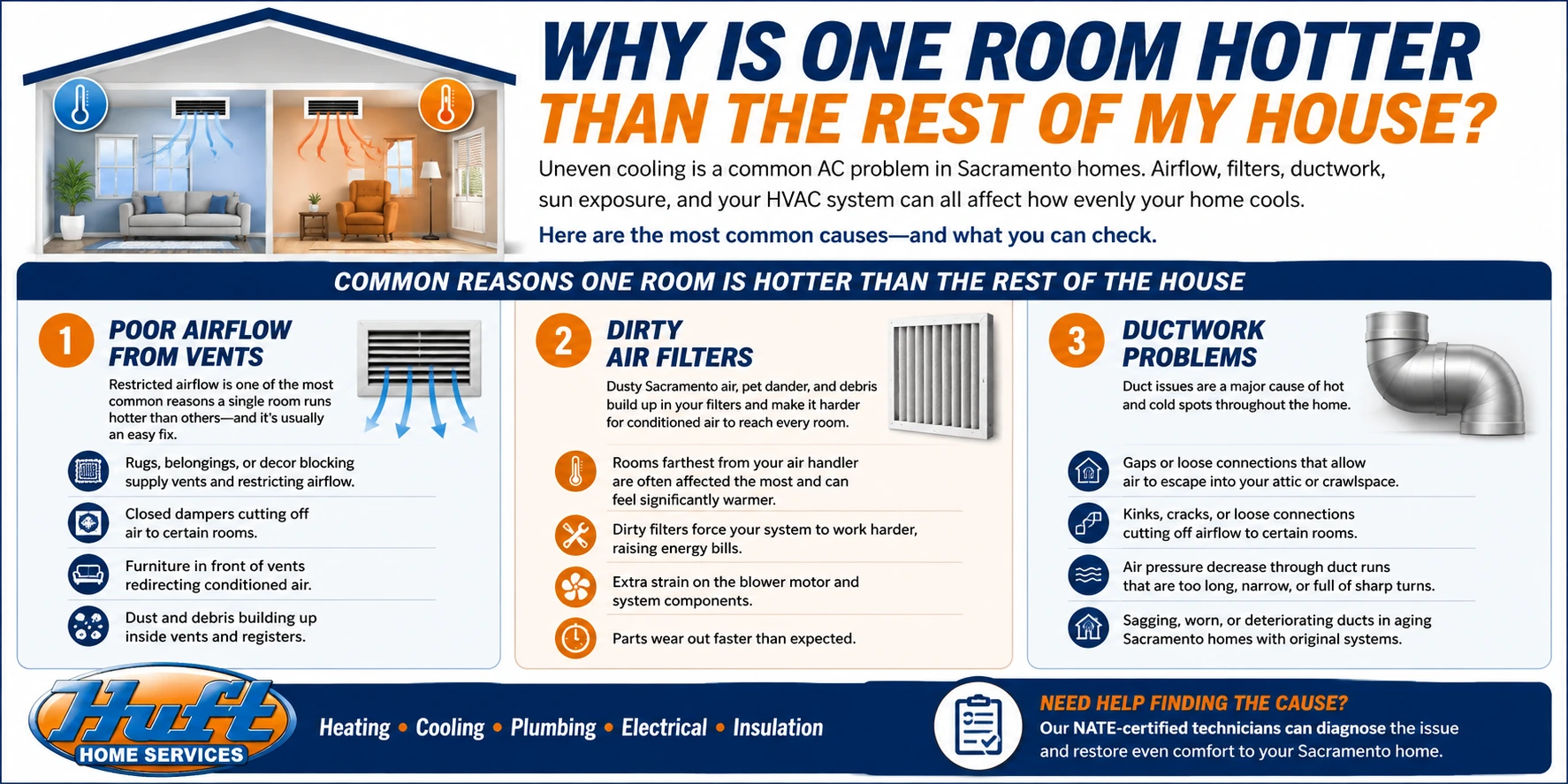
When your air conditioner isn’t evenly cooling your home, the problem often lies inside your vents, air filters, or ducts.
Poor airflow from vents
Restricted airflow is one of the most common reasons a single room runs hotter than others, and it’s usually an easy fix. Before calling the pros, check for the following problems that could be blocking air from reaching some rooms:
- Rugs, belongings, or decor blocking supply vents and restricting airflow.
- Closed dampers cutting off air to certain rooms.
- Furniture in front of vents redirecting conditioned air.
- Dust and debris building up inside vents and registers.
Dirty air filters
Without regular maintenance, dusty Sacramento air, pet dander, and everyday debris can build up in your AC air filters, diminish your indoor air quality, and prevent conditioned air from reaching every room. Rooms farthest from your air handler are often affected the most and can feel significantly warmer than the rest of the house.
Dirty air filters also force your equipment to work harder to push air through, putting added strain on the blower motor and the rest of your system. You’ll have uneven temperatures from room to room, higher energy bills, and parts that wear out faster than expected.
Ductwork problems
Duct issues are one of the most common culprits of hot and cold spots throughout the home. Your ducts are responsible for delivering conditioned air throughout your home, so when they’re damaged, poorly designed, or aging, it makes it harder to distribute air evenly. Common issues include:
- Gaps or loose connections that allow air to escape into your attic or crawlspace.
- Kinks, cracks, or loose connections cutting off airflow to certain rooms.
- Air pressure decrease through duct runs that are too long, narrow, or full of sharp turns.
- Sagging, worn, or deteriorating ducts in aging Sacramento homes with original systems.
Why upstairs rooms often feel hotter
While hot and cold spots can happen anywhere in your home, it’s most common to find them in upstairs rooms.
Heat naturally rises
Warm air is less dense than cool air, so it drifts upward through your home. Second floors naturally collect heat that rises from the level below, on top of the intense solar heat radiating from the roof above.
Attic heat transfer
The attic sitting on top of your home is often where the problem starts. Upstairs rooms can become much hotter than downstairs when:
- Insufficient attic insulation is letting heat soak in through the ceiling.
- Pool ventilation traps hot air inside.
- Superheated attic spaces during triple-digit summer days radiate heat into the rooms below.
Excessive sun exposure
Hot spots can be a matter of where a room sits in your home. South- and west-facing rooms get the bulk of afternoon sun, while those with large windows allow more solar heat to enter throughout the day. If there are no trees, overhangs, or awnings blocking your windows, you’ll also have nothing to soften the solar load during long, hot summer days.
Could Your HVAC System Be the Problem?
If you’re still dealing with uneven cooling after ruling out quick fixes, it’s likely there is a larger, underlying issue.
AC system is undersized
An undersized AC system can’t keep up when temperatures spike. During Sacramento’s peak heat waves, an undersized unit runs at maximum capacity and still can’t produce enough cooling, leaving rooms farthest away from the air handler or exposed to the sun uncomfortably hot.
Aging equipment
Air conditioners lose cooling capacity over time, making it harder to keep every room cool. Older ACs deliver weaker, more uneven airflow, use outdated refrigerant, and have declining performance, meaning rooms that were once comfortable now feel unevenly hot.
Improper HVAC design
If your HVAC system was never installed to cool effectively, certain rooms will always struggle. Incorrect duct sizing, poorly placed registers, and a lack of zoning can all leave some rooms without conditioned air.
How Insulation and Air Leaks Affect Room Temperatures
Even if your HVAC system is perfectly sized and working as it should, lack of insulation and air leaks can allow conditioned air to escape and let hot air seep in.
Missing or inadequate insulation
Exterior walls, attics, knee walls, and bonus rooms over garages are often built without proper insulation. Without enough insulation to keep cool air inside, those spaces heat up quickly and stay warm through the long stretches of summer.
Drafts and air leaks
Wherever your home isn’t properly sealed, conditioned air can escape, and hot air can seep in. Windows, exterior doors, electrical panels, and recessed lighting can all be sources of leaks, affecting your comfort and energy efficiency as your AC works overtime to make up the difference.
Simple Things Homeowners Can Check First
Before calling for professional help, there are a few troubleshooting steps you can take to solve the problem yourself:
- Replace or clean your HVAC air filter.
- Make sure all vents and registers are open.
- Move any furniture blocking registers.
- Double-check your thermostat settings.
- Inspect windows and doors for drafts.
- Close blinds or curtains during peak afternoon sun.
These steps can help solve minor problems, but they won’t resolve underlying AC issues. If there’s a deeper issue within your ducts, insulation, or equipment, you’ll need professional help to solve the problem for good.
When to Call an HVAC Professional
If you’re seeing any of the following, it’s time to bring in an expert:
- The same room overheats every summer.
- You notice a large temperature gap between rooms.
- Airflow from the vents feels weak.
- Energy bills continue to climb.
- Your HVAC system is running constantly.
- You’re calling for AC repairs more and more often.
A professional airflow and system evaluation helps you get to the root cause of your uneven cooling. Experienced technicians can measure airflow, check your ducts, assess the insulation, and check whether your system is properly sized for your home. With a clear understanding of what’s going on, you can choose solutions that target the root cause for a long-lasting fix.
Solutions for Permanently Fixing Hot Rooms
After a professional airflow and system evaluation, you’ll receive a report on the causes of your hot rooms. Depending on the diagnosis, you can consider several solutions to permanently eliminate hot and cold spots.
Duct sealing or repair
If leaky, crushed, or disconnected ducts are the problem, sealing and repairing them restores airflow and reduces strain on your HVAC equipment. For older homes with original ducts in areas like East Sacramento and Carmichael, this is often the best way to even out the temperature across your home.
Additional insulation
Adding insulation to attics, exterior walls, knee walls, and bonus rooms can help keep the summer heat out and your conditioned air inside. It’s a cost-effective upgrade that helps take pressure off your AC, lower your monthly energy bills, and keep every room more comfortable.
Attic ventilation improvements
Improving your attic ventilation gives superheated air a way to escape before it reaches the rooms below. On triple-digit summer afternoons, proper ventilation pushes excess heat outdoors rather than letting it build up and turn your upstairs into a sauna.
HVAC zoning systems
Zoning systems divide your home into separate areas, each with its own thermostat and dampers, so you can cool problem rooms independently. Instead of adjusting your entire system, you can direct conditioned air where it’s needed without overcooling the rest of the house.
Ductless mini-split installation
Ductless mini-splits offer targeted, energy-efficient cooling without the need for ductwork. It’s an ideal solution for stubborn hot rooms, bonus rooms, and additions where ducts aren’t practical. They cool a single space directly, so you can target cooling exactly where it’s needed without running new ducts or making costly modifications.
Get Expert Help Solving Uneven Cooling Problems
At Huft Home Services, we understand how Sacramento’s scorching summer heat and aging equipment can leave homes across the area with rooms that never seem to cool down. Our NATE-certified technicians use comprehensive HVAC diagnostics and energy-efficiency-focused solutions to improve comfort throughout your entire home and fix hot spots for good.
Call us or book online to schedule your evaluation today and get every room feeling evenly cool. Worried about the cost? Check out our special offers and financing plans that make your upgrades more affordable. You can also join our Huft Protection Plan to receive routine maintenance that keeps your home at the right temperature year-round.